
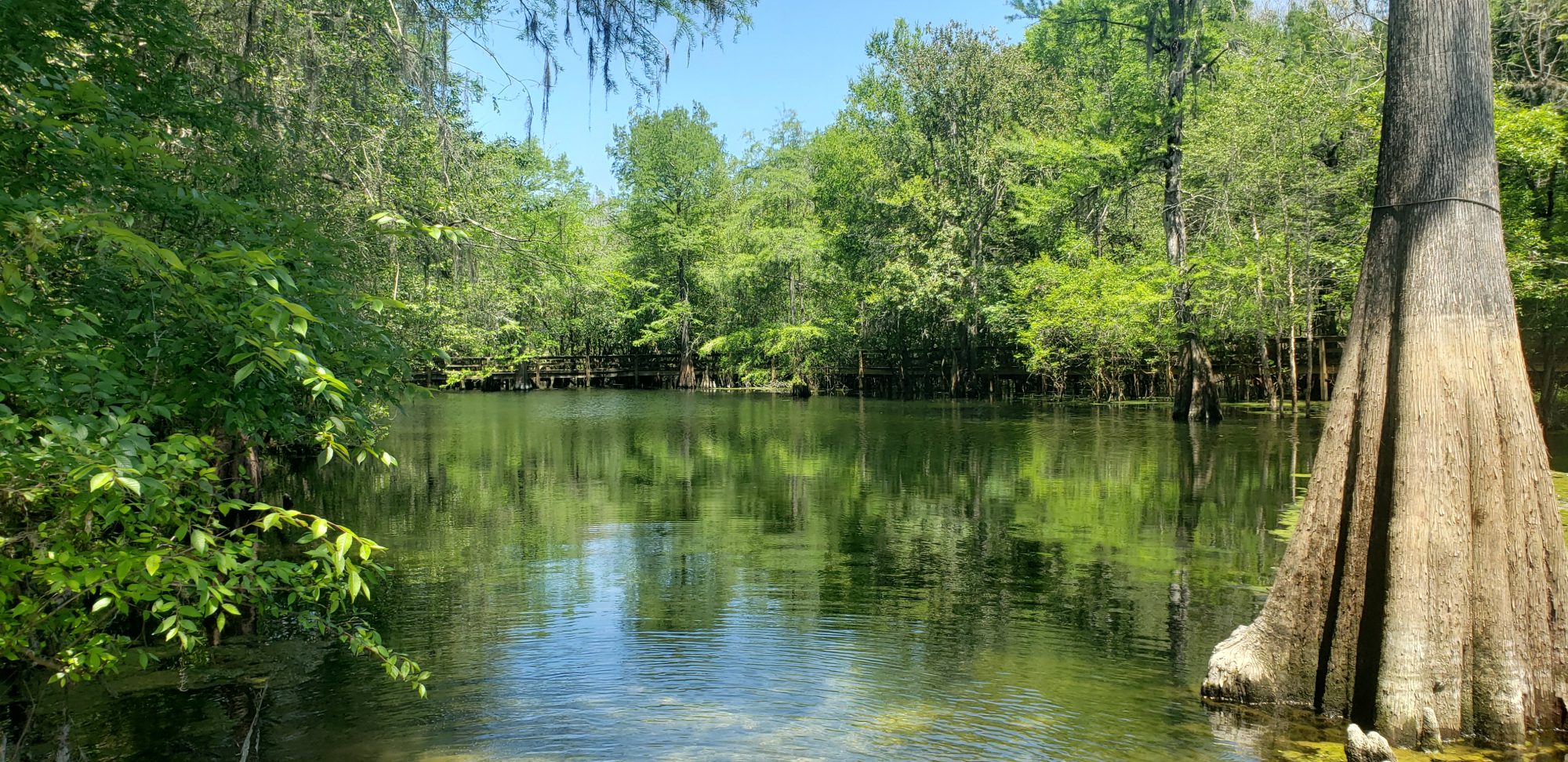
Water & Air Research, Inc. (Water & Air) conducted a biological assessment of 18 priority springs within the Suwannee River Water Management District (SRWMD) to document the current condition of these important spring ecosystems. The project supports SRWMD’s Minimum Flows and Minimum Water Levels (MFLs) program, a science-based process designed to ensure water availability for the future while protecting the natural resources that depend on Florida’s water systems. The information collected provides a baseline for evaluating changes in spring ecosystems and supports the development of individual MFLs for priority springs.
Water & Air conducted habitat sampling, flow measurements, aquatic biology sampling, taxonomic analysis, database management, and technical memorandum preparation as part of the assessment. Field teams evaluated the physical and vegetative habitats present at each spring, including submerged and emergent aquatic vegetation, and documented characteristics such as water depth, substrate, flow, and water quality. Aquatic organisms, including macroinvertebrates, were sampled from representative habitats and identified to the lowest practicable taxonomic level. These assessments provided a detailed picture of the biological communities supported by each spring and the habitats in which they occur.
The 18 springs assessed varied considerably in their physical characteristics, habitat availability, and biological communities. Many sites supported abundant aquatic vegetation, fish, and other aquatic life, while differences in habitat quality and surrounding conditions contributed to variation among individual springs. The project also helped identify biological data gaps and opportunities for future monitoring, providing SRWMD with information that can be used to evaluate potential relationships between spring flow and water levels and the health of biological communities.
Water & Air compiled the findings into three technical memoranda covering spring selection and background information, sampling methods and results, and recommendations for addressing biological data gaps and future spring monitoring. Together, these deliverables provide SRWMD with a valuable foundation for understanding the biological condition of priority springs and evaluating how changes in water availability may affect spring habitats. The project demonstrates the importance of biological data in making informed decisions about the long-term management and protection of Florida’s springs.